
Pulse Measurement Using Sodium Iodide Scintillation Detectors
Match Pyramid preamps to NaI(Tl) pulse shape for counting and pulse-height analysis, with CP10, CP15, CR10, and C400 examples.
NaI(Tl) scintillation detectors remain the workhorse for X-ray and gamma measurement from a few keV upward. Choosing the right Pyramid preamplifier turns the photomultiplier's complex charge burst into a clean pulse for counting or pulse-height analysis. Pair this note with pulse counting hardware such as the CP15, CP10, CR10, and C400.
Sodium Iodide Detectors
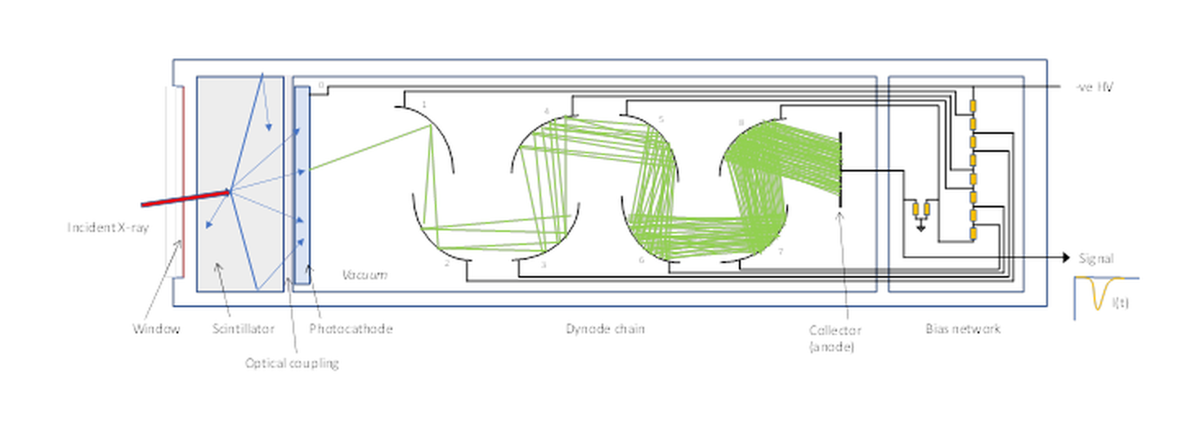
When a photon interacts in the scintillator, most of its energy becomes blue light at the photocathode. Photoelectrons accelerate through a dynode chain; each stage multiplies the charge until the anode pulse can contain to electrons. That gain is what makes single-photon events measurable.
Other scintillators can be faster or brighter, but usually cost more. For many counting and moderate-resolution spectroscopy jobs, NaI(Tl) is still the practical default.
Types of Measurement
The same detector supports two emphases:
- Pulse counting: the data is event rate. Count pulses individually even when they arrive close in time, usually after a height window rejects background.
- Pulse height analysis: the data is charge per pulse (energy deposited). Precision of the height measurement matters most, though the chain must still keep up with useful rates.
Real systems mix both needs: counting usually still gates on pulse size, and spectroscopy still needs enough throughput.
Pre-Amplification
Match the preamp bandwidth and filtering to NaI's light and avalanche time structure. A single 59.6 keV gamma event through a very fast front end such as the CP10-B shows bursts of charge lasting about 1 µs:
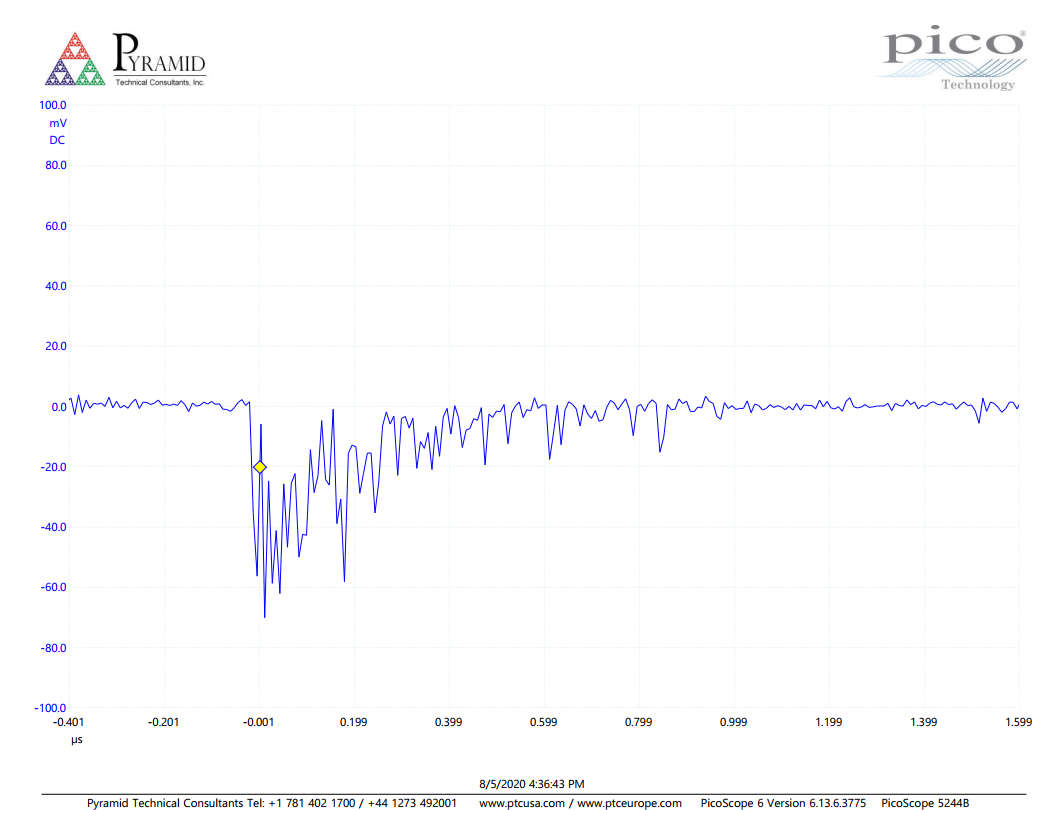
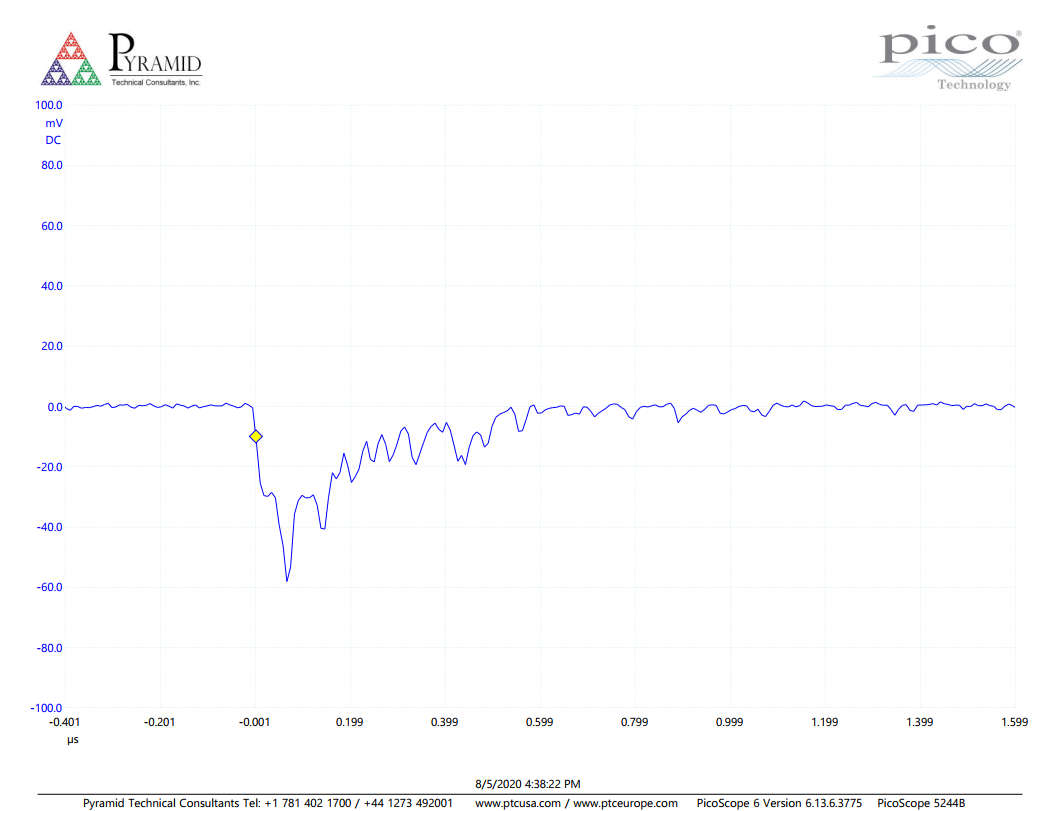
That fine structure is unusable for counting or MCA work. A lower-bandwidth CP10-A is better for faster scintillators, but still leaves too much detail on NaI:
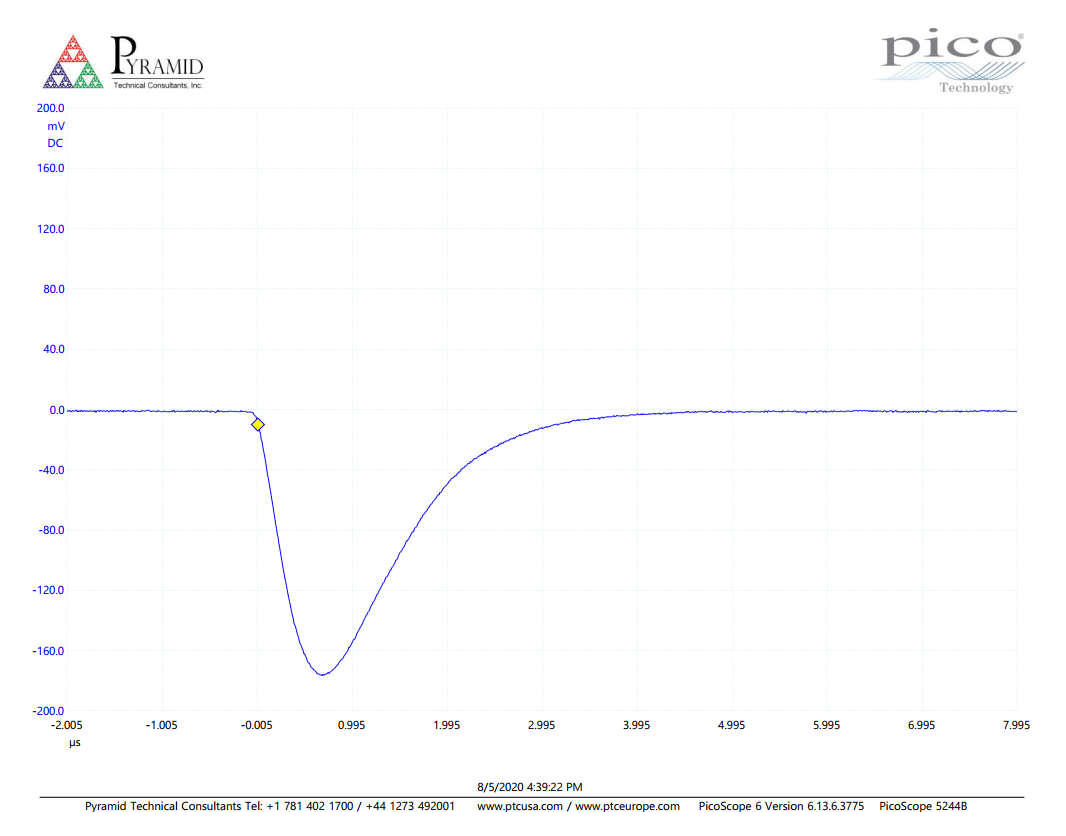
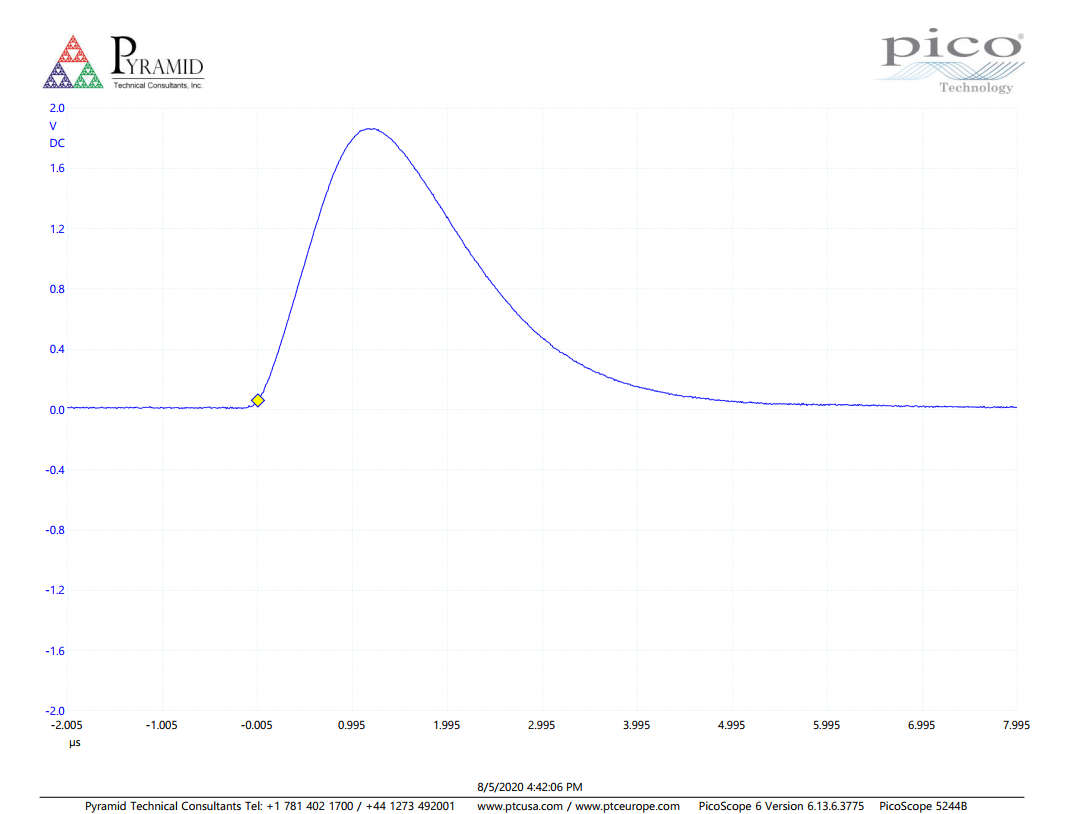
The CP10AF variant adds filtering so the burst collapses to one clean pulse:
The CP15AF adds gain and optional inversion. Higher gain lets you lower photomultiplier bias and reduce dark counts:
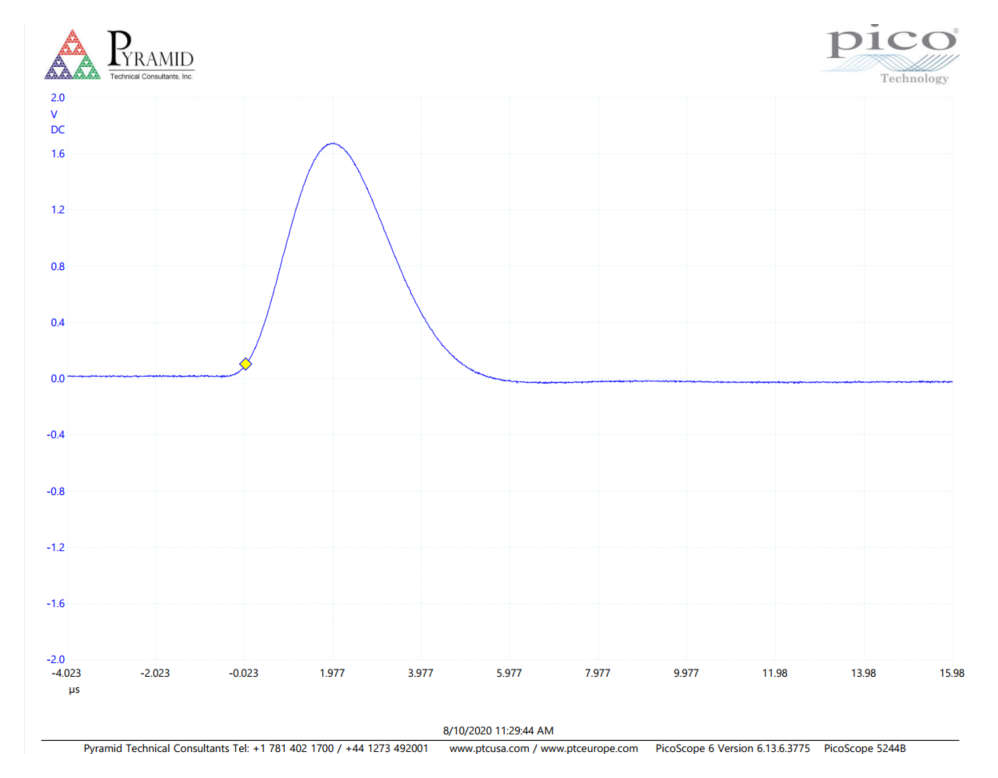
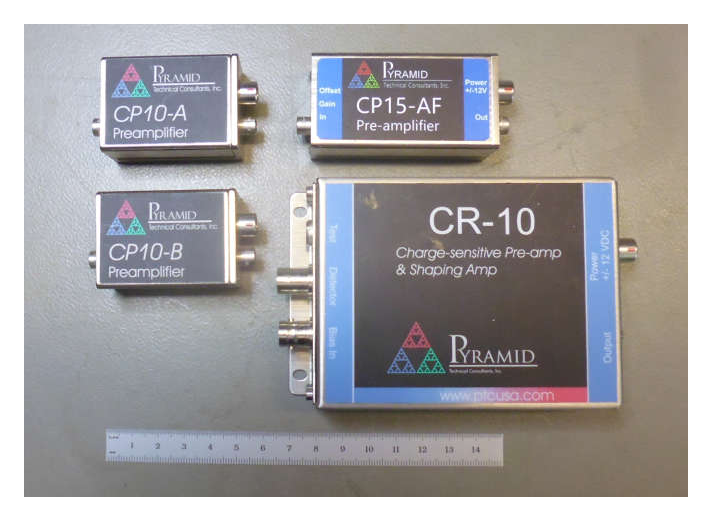
The classic spectroscopy path integrates charge, then shapes a Gaussian whose height tracks deposited energy. The CR10 does that with selectable shaping times and a wide gain range (physically larger than the CP10 / CP15 matchbox packages):
Pulse Height Analysis
CR10 low noise and flexible shaping cover a wide spectroscopy range. NaI already delivers large charge per photon with only moderate energy resolution, so CR10 performance is not fully stressed. The CP15AF is sized for NaI: similar pulse-height quality in a smaller, lower-cost package.
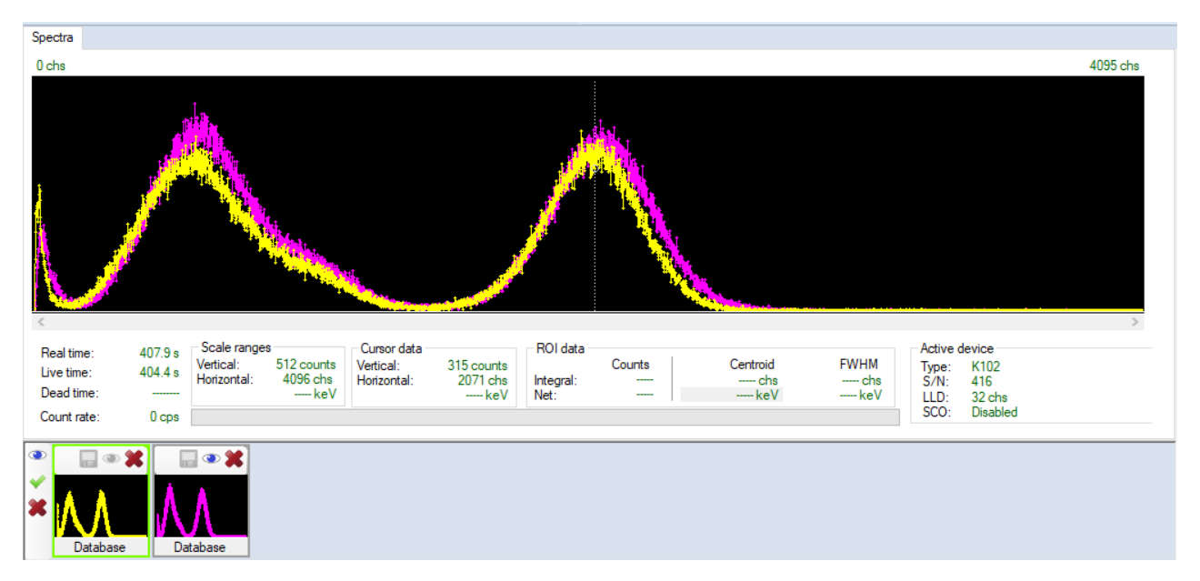
The overlaid Am-241 spectra below used an FMB-Oxford C30NA20B NaI detector. The high-energy photopeak is 59.6 keV. Gains of a CR10 (1 µs shaping) and a CP15AF were matched for overlay (yellow: CP15AF; magenta: CR10):
For multi-channel counting with bias and discrimination, continue to the C400. Browse the full pulse counting line, or contact us / Support if you need a NaI front-end recommendation.
Further Information
Related notes and routes: ion-beam formulae, F or I device selection, and transmission IC dosimetry when the detector question moves from scintillation pulses to nozzle dose.